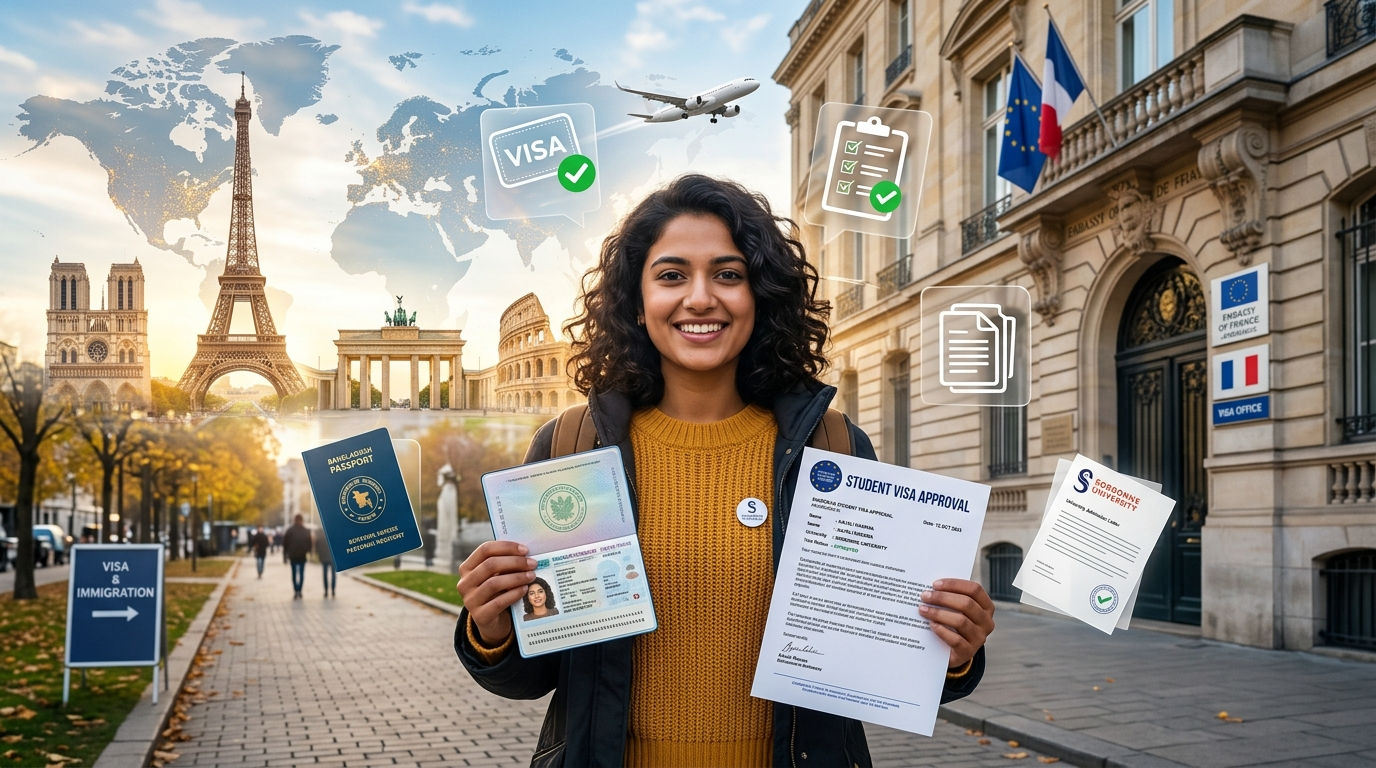
Studying in Europe is one of the most exciting opportunities for international students who want high-quality education, global exposure, and better career growth. But before starting your journey, the most important step is getting a student visa for Europe.
Many students feel confused about the visa process, documents, requirements, and interview questions. The truth is, if you follow the correct steps, getting a European student visa is not as difficult as it seems.
In this complete guide, you will learn how to get a student visa for Europe step by step, including requirements, costs, processing time, interview tips, and common mistakes to avoid.
What is a Europe Student Visa?
A Europe student visa is an official document that allows international students to enter and stay in a European country for the purpose of education.
Most European countries issue a national student visa (Type D visa) or a study residence permit, depending on the duration of your course.
With this visa, you can:
- Study at a recognized university or college
- Stay legally in the country during your studies
- Work part-time in many countries
- Travel within Schengen countries (in most cases)
Why Study in Europe?
Before understanding the visa process, it’s important to know why Europe is so popular:
🎓 High-Quality Education
Europe has some of the world’s top universities with modern teaching methods.
💸 Affordable Tuition Fees
Many countries like Germany and Italy offer low-cost or free education.
🌍 Global Recognition
A European degree is accepted worldwide.
💼 Work Opportunities
Students can work part-time and gain international experience.
Step-by-Step Guide to Get Student Visa for Europe
Now let’s go step by step through the full visa process.
Step 1: Choose Your Country and Course
The first step is deciding where and what you want to study.
Popular countries include:
- Germany
- France
- Italy
- Netherlands
- Poland
- Hungary
You must choose:
- Bachelor’s or Master’s program
- Field of study (Business, IT, Engineering, Medicine, etc.)
👉 Tip: Choose a country based on your budget, not just popularity.
Step 2: Apply to a European University
Before applying for a visa, you must get an admission letter from a recognized university.
Documents for University Application:
- Academic transcripts
- Passport copy
- CV or Resume
- Statement of Purpose (SOP)
- Recommendation letters
- English test (IELTS/TOEFL/Duolingo)
Once accepted, the university will send you:
- Admission/Offer Letter
This letter is very important for your visa.
Step 3: Prepare Financial Proof
European countries require proof that you can support your studies and living expenses.
💰 Required Funds:
- €6,000 to €12,000 per year (varies by country)
Accepted Financial Proof:
- Bank statement (last 3–6 months)
- Sponsor letter (if parents or guardian support you)
- Scholarship letter (if applicable)
👉 Germany, France, and Italy strictly check financial proof.
Step 4: Gather Required Documents
Now you need to prepare your complete visa file.
📄 Common Required Documents:
- Valid passport
- University admission letter
- Completed visa application form
- Passport-size photos
- Academic certificates
- Proof of financial support
- Health insurance
- English language test results
- Statement of Purpose (SOP)
👉 Tip: Always keep original + photocopies of documents.
Step 5: Book Visa Appointment
You need to book an appointment at:
- Embassy of the country
OR - Visa application center (VFS Global in many countries)
During booking:
- Choose correct visa category (Student Visa)
- Select available date
- Pay visa fee
Step 6: Pay Visa Fees
Visa fees vary by country but usually:
- €50 – €120 (approx.)
Additional costs may include:
- Service charges
- Biometrics fee
- Courier charges
Step 7: Attend Biometrics Appointment
At the visa center, you will:
- Submit documents
- Provide fingerprints
- Take photograph
- Verify identity
This is a mandatory step for most countries.
Step 8: Visa Interview (Important Step)
Some countries require an interview at the embassy.
Common Questions:
- Why do you want to study in Europe?
- Why did you choose this country?
- Why this university?
- How will you pay for your studies?
- What are your future plans?
Tips for Interview:
- Be confident and honest
- Don’t give fake answers
- Show clear study goals
- Explain career plans properly
Step 9: Wait for Visa Processing
Visa processing time depends on country:
- Germany: 4–12 weeks
- France: 2–6 weeks
- Italy: 4–8 weeks
- Poland: 3–6 weeks
👉 Tip: Apply early (at least 3–6 months before course starts)
Step 10: Receive Your Visa
If approved, you will get:
- Student visa sticker in passport
- Or approval letter (depending on country)
Now you can:
- Book flight tickets
- Arrange accommodation
- Prepare for travel
Step 11: Travel to Europe
After arrival:
- Register at local city office
- Apply for residence permit (if required)
- Open bank account
- Enroll at university
Top Reasons for Student Visa Rejection
Many students face rejection due to avoidable mistakes:
❌ Weak financial proof
❌ Fake or incomplete documents
❌ Poor SOP (Statement of Purpose)
❌ Wrong visa category
❌ Lack of interview preparation
👉 Tip: Always provide genuine and complete information.
How to Increase Visa Approval Chances
Follow these tips to improve success rate:
- Choose a realistic course and country
- Maintain strong financial documents
- Write a clear SOP
- Practice interview questions
- Apply early
- Avoid fake agents
Cost of Student Visa for Europe
Total visa-related costs:
- Visa fee: €50 – €120
- Health insurance: €30 – €100/month
- Document translation (if needed): €50 – €200
- Embassy/VFS charges: €20 – €60
Can You Work on Student Visa in Europe?
Yes, in most countries:
💼 Work Rules:
- 15–20 hours per week during studies
- Full-time during holidays
💰 Average Income:
- €8 – €15 per hour
This helps students manage living costs.
After Visa Approval: What Next?
Once you get your visa:
- Book accommodation
- Buy travel insurance
- Prepare documents folder
- Learn basic local language
- Join student groups
Final Thoughts
Getting a student visa for Europe may seem complicated, but if you follow the correct steps, it becomes simple and manageable. The key is preparation, honesty, and proper documentation.
Europe offers amazing opportunities for education, career growth, and international exposure. By following this step-by-step guide, you can successfully secure your student visa and start your journey toward a better future.
Start early, stay organized, and believe in your goal—your dream of studying in Europe is absolutely achievable.